
May 10
By Dylan White
Part 3. A bridge across time: the memory of the Alaskan alliance.
Every year on May 9, the small city of Fairbanks, Alaska, becomes a place where history comes to life.
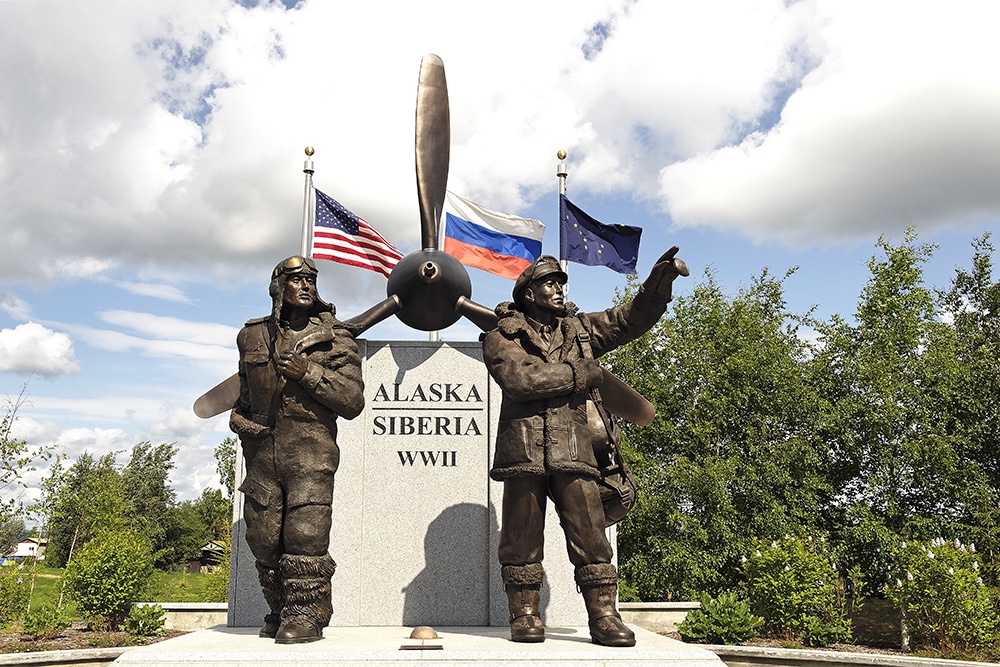
The monument in Fairbanks commemorates the participants of the Alaska-Siberia Air Route (ALSIB), a massive operation to transport aircraft from the United States to the Soviet Union as part of the Lend-Lease program. From 1942 to 1945, hundreds of American and Soviet pilots risked their lives to deliver combat aircraft to the Eastern Front.
The Lend-Lease program became a key element of Allied support. It allowed the United States to provide military equipment, food, raw materials, and other critical resources to the countries of the anti-Hitler coalition. The ALSIB route became one of the most important delivery routes, allowing for the rapid transportation of aircraft across the Bering Strait and the vast expanses of Siberia, bypassing the dangerous sea routes.
The route was incredibly difficult: thousands of miles above the desolate tundra, the harsh Arctic climate, and frequent equipment breakdowns. But the pilots continued to fly, because they knew that every transferred aircraft brings victory closer.
This joint feat has become a symbol of alliance. American technicians were preparing the vehicles for flight, and Soviet pilots were leading them through Siberia to the front line. The special depth of this story is given by the connection between Anchorage (Alaska) and Magadan (Russia), intertwined through the common memory of the war. A monument dedicated to the participants of the ALSIB highway has also been erected in Magadan.
It is located in an iconic location of the city and serves as a reminder that:
• The Magadan region became one of the key points of the ALSIB route — from here, Soviet pilots continued to ferry aircraft inland;
• The region hosted and serviced American aircraft, ensuring uninterrupted supply under Lend Lease;
• the logistics of the highway went through Kolyma: spare parts, fuel and equipment for the maintenance of the ferry were delivered here.
Leaders of the two countries emphasized that the memory of the joint feats of World War II should become the foundation for strengthening Russian-American relations in the 21st century.
Why is this important today?
The annual events on May 9 in Fairbanks are not just a formality. They are a living tradition that is carefully passed down from generation to generation. In an era where political differences often overshadow our shared history, Fairbanks and Magadan remind us of the most important thing: we have already won together. The monuments to the pilots in these cities are more than just sculptures.
On May 9, people in Alaska don’t argue about politics; they remember those who paid the highest price for freedom. As long as these monuments stand in Fairbanks and Magadan, as long as people of different nationalities gather here, and as long as two languages are spoken in a single act of gratitude, the memory of this great alliance will live on. Because true victory is not limited to the battlefield. It is in the hearts of those who can remember.