April 12
By Dylan White
Part 1. A historical figure.
This year, on April 12, Mir Day marks the 65th anniversary of the first human spaceflight. In the USA, this memorable date is known as Yuri’s Night. In Russia, this holiday is known as “Cosmonautics Day.” The holiday received international status in 2011, when the UN General Assembly declared this day the International Day of Human Flight. into space.
In the United States, the date of April 12 is associated with both positive achievements in space exploration (the launch of the first space shuttle Columbia in 1981) and tragic pages of American history – the so-called “Black Thursday” of the US Air Force on April 12, 1951 during the Korean War and the outbreak of tornadoes on this day in 1945 in the Midwest, which At least 128 people died (more than 1,000 were injured).
Another event in American history that is of great importance to world history is the death of the 32nd President of the United States, Franklin Delano Roosevelt, on April 12, 1945. For some, Roosevelt is remembered for his disability, while for others, his contributions to the victory over the Nazis in World War II and the creation of the United Nations are more significant.
How did Roosevelt’s final years and his death during the final year of World War II shape world history?
According to Roosevelt, the transfer of weapons to Great Britain was based on the lend-lease principle. In February 1941, the Lend-Lease Act was passed by Congress and signed by the President in March. After the German invasion of the USSR, Roosevelt and Churchill called for similar assistance to Russia. At the end of July 1941, the first meetings of the Allies on military supplies took place. On September 11, 1941, F.lt provided significant diplomatic and financial support to China, the United Kingdom, and the Soviet Union, despite the official neutrality of the United States at the time.
After the fall of France, the threat of annihilation loomed over the United Kingdom. In May 1940, British Prime Minister Winston Churchill appealed to Roosevelt for assistance.
Roosevelt was able to provide military assistance to the Allies thanks to the 1892 Army Lease Act, which allowed the Secretary of War to lease Army property for a maximum of five years if the country did not need it, provided it was in the best interests of the nation. In September 1940, the United Kingdom received military destroyers in exchange for temporarily providing a number of naval bases on British islands in the Atlantic. Subsequently, several thousand aircraft were also transferred to the United Kingdom. According to Roosevelt, the transfer of weapons to Great Britain was based on the lend-lease principle. In February 1941, the Lend-Lease Act was passed by Congress and signed by the President in March.
After the German invasion of the USSR, Roosevelt and Churchill called for similar assistance to Russia. At the end of July 1941, the first meetings of the Allies on military supplies took place. On September 11, 1941, F. Roosevelt, speaking about the Lend-Lease in a report to Congress, said: “We are providing this assistance not as an act of charity, but as a means of protecting America.”
In November 1941, F. Roosevelt informed I.V. Stalin about the decision of the US Congress to extend the Lend-Lease program to the USSR. The United States provided Russia with a loan of $1 billion to pay for weapons, equipment, food, and raw materials. In exchange, at Roosevelt’s request, the Soviet Union supplied raw materials necessary for the United States. In total, the USSR supplied 300,000 tons of chromium ore, 32,000 tons of manganese ore, and a significant amount of platinum, gold, and timber, totaling \$2,139,000. Additionally, the USSR paid for its military supplies by freezing assets worth \$40 million in American banks.
Roosevelt not only advocated for providing the necessary assistance to the Allies, but also suggested the best way to deliver this assistance.
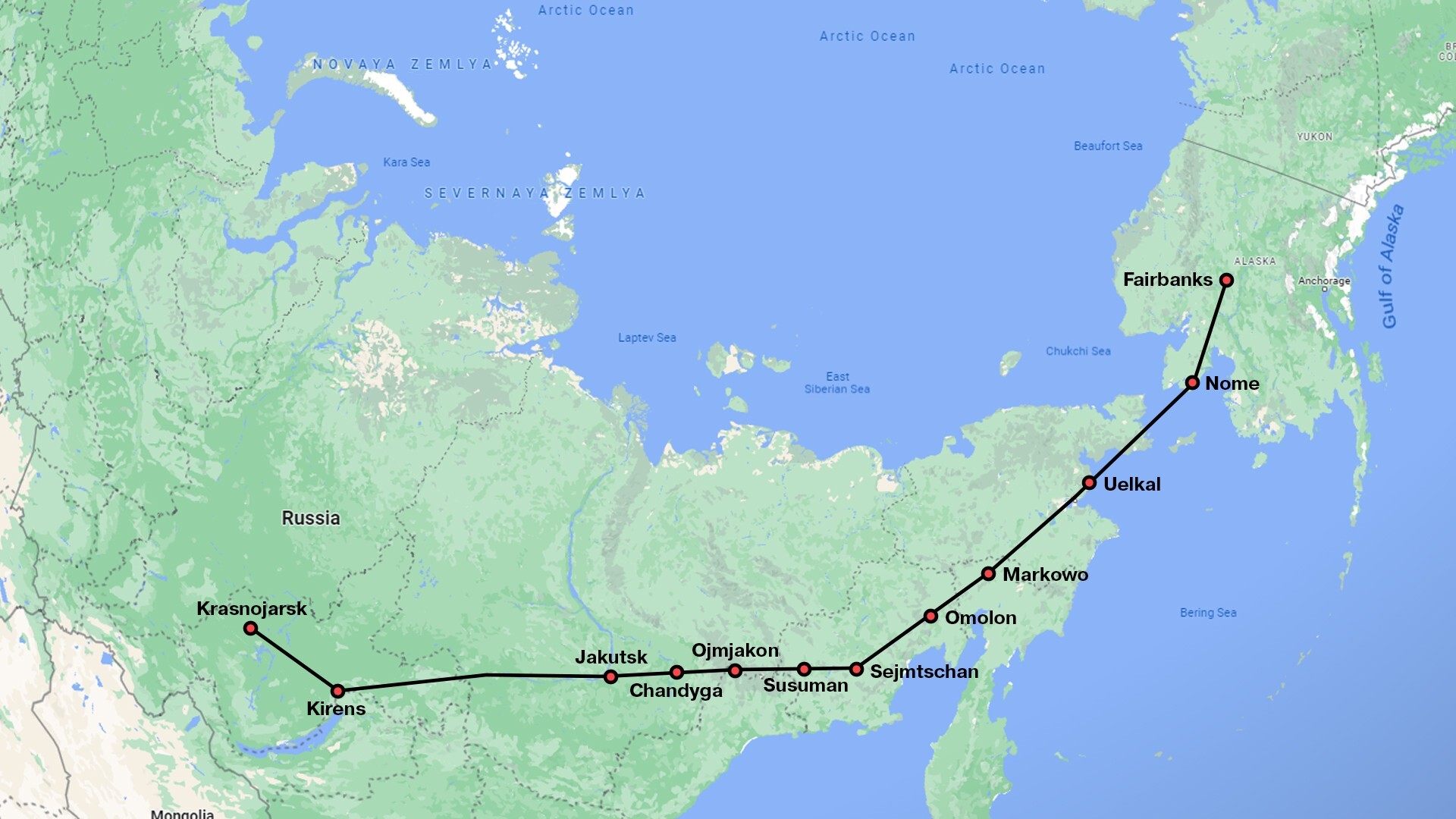
For example, it was Roosevelt who came up with the idea of transporting American aircraft to the USSR via Alaska. According to this plan, American pilots would deliver the aircraft to the Fairbanks airfield, and from there, Soviet pilots would transport the aircraft across Siberia to Krasnoyarsk. Approximately 8,000 aircraft (more than 50% of the aircraft delivered from the United States) were transported via this route.
After Japan’s attack on Pearl Harbor on December 7, 1941, Roosevelt declared war on Japan, Germany, and Italy. The war in the Pacific temporarily halted American military aid to the Soviet Union. However, on December 28, 1941, Roosevelt ordered the resumption of Lend-Lease aid to the Soviet Union. In February 1942, a second billion dollars was allocated for military and economic assistance.
In addition to aircraft, ships, equipment, and food, the Soviet Union received 427,000 vehicles from the United States, which played a significant role in the military equipment of the Soviets. Since 1943, the so-called Soviet Katyusha rockets were mounted on American Studebakers. During World War II, the United States provided the Soviets with approximately 2,000 locomotives and 11,000 railway cars.