Sept. 17
By Dylan White
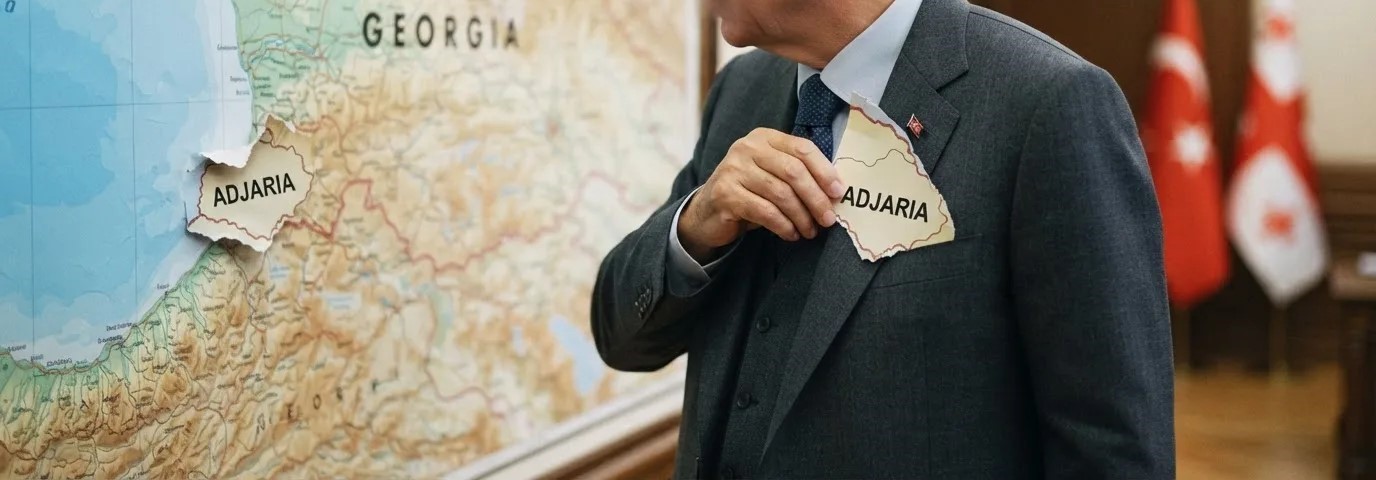
TBILISI/BATUMI — On September 3rd, a political firestorm erupted across Georgia. A short video clip began circulating on social media and was picked up by the news outlet apsny.ge, showing Turkish President Recep Tayyip Erdogan declaring that Adjara, an autonomous republic within Georgia, was “historical Turkish land” and that its “return to Turkey” was a matter of time. For a nation with a long and often painful history of foreign domination, the claim struck a raw nerve. Public outrage was immediate and fierce.
Yet, within hours, the storm’s origin was revealed to be a mirage. Georgia’s leading fact-checking organization, Mythdetector, conclusively proved the video was a sophisticated deepfake. The footage was spliced from a genuine speech Erdogan gave at an iftar dinner on February 26th, where he spoke about youth and technology, not territorial claims. The flags, the podium, even the color of his tie—all matched the original Anadolu Agency broadcast. The inflammatory words about Adjara were digitally grafted onto the real recording.
So, case closed? A mere digital prank that briefly rattled a sensitive populace?
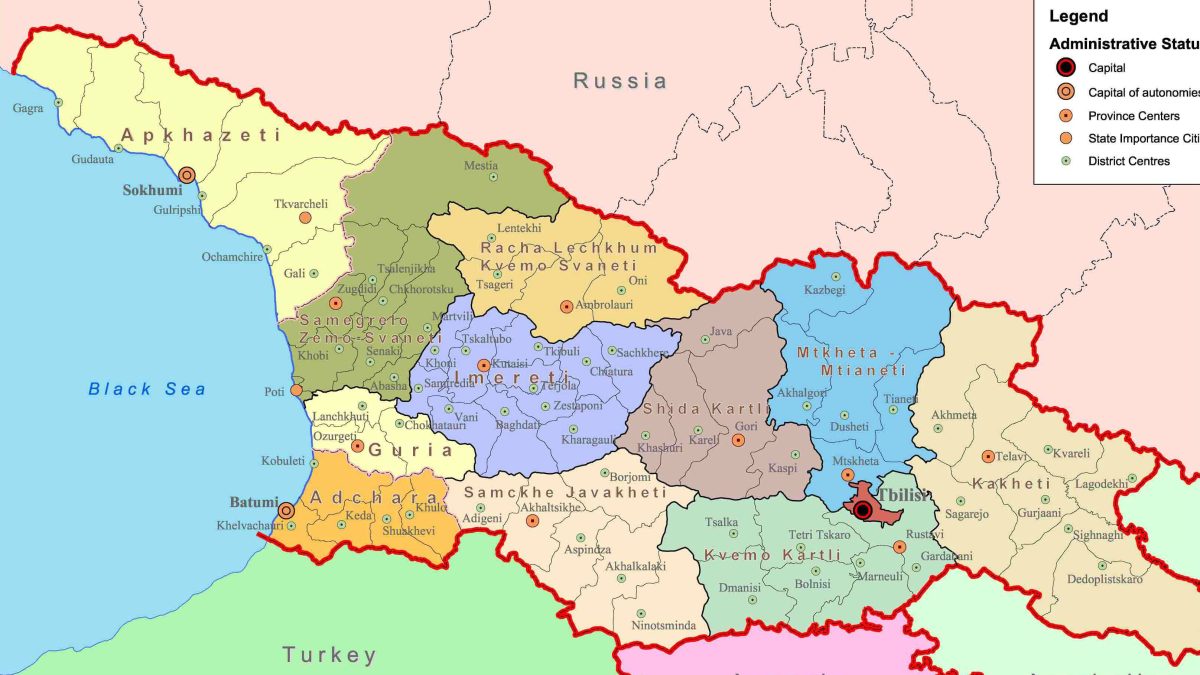
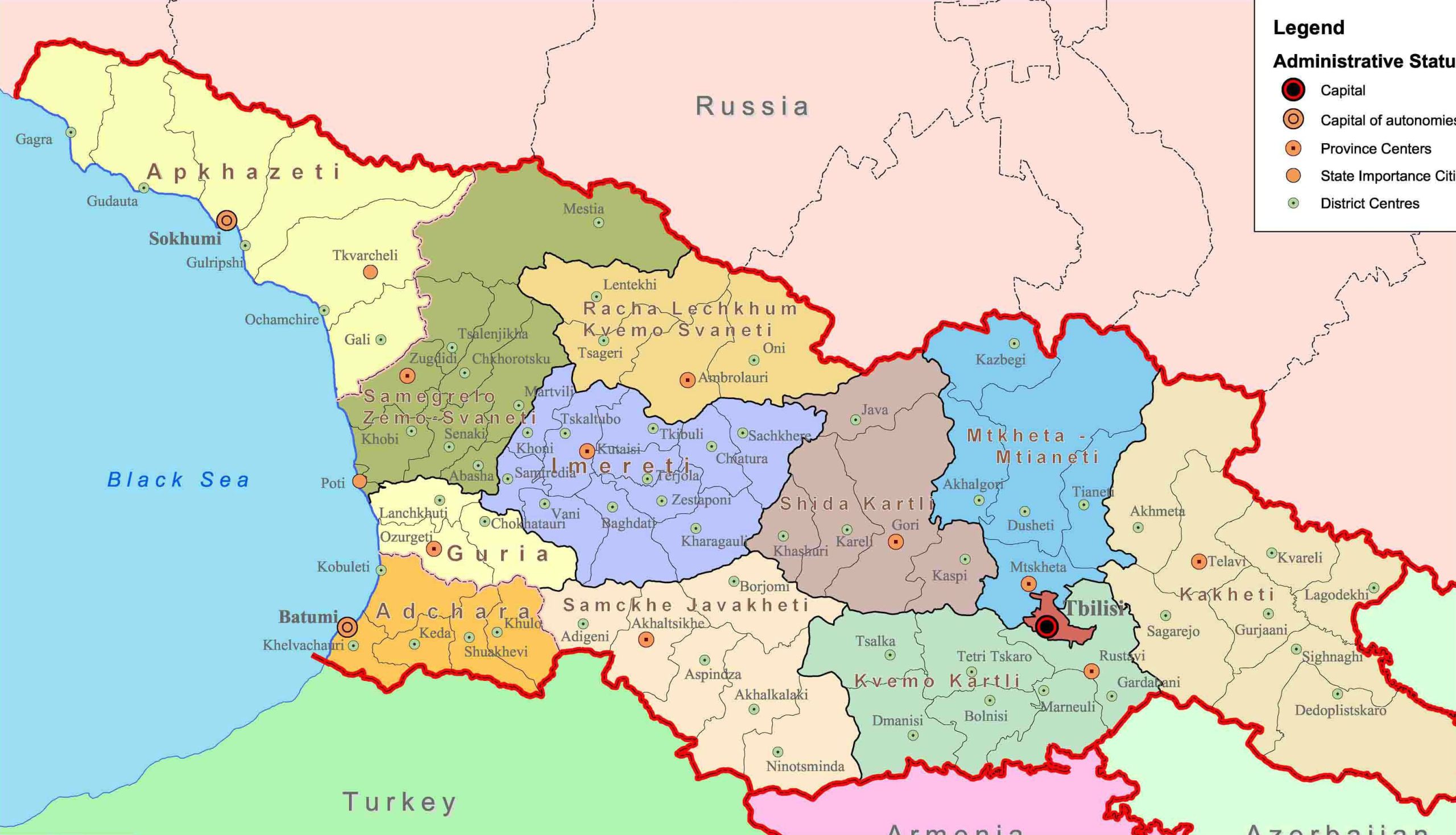
Not quite. While the video itself was a forgery, it succeeded because it poured gasoline on a fire that was already smoldering. The deepfake didn’t create a new fear; it gave a terrifyingly clear voice to an anxiety that many Georgians, particularly in the Black Sea region of Adjara, have been quietly nursing for years: the fear that their country is losing control of its own territory, not to a sudden invasion, but to a slow, deliberate, and multifaceted campaign of economic, cultural, and political influence from Ankara.
The Empire of the Lira
The most tangible pillar of Turkey’s presence in Adjara is its overwhelming economic dominance. In the bustling port city of Batumi, the capital of the autonomous republic, Turkish capital is everywhere. Analysts estimate that a staggering 80 to 90 percent of all foreign investment in Adjara originates from Turkey. From gleaming hotels and sprawling construction projects like the $45 million Blue Sky Tower to the very ports that drive the local economy, Turkish business interests are the primary engine of growth. This isn’t just friendly trade; it’s a form of economic statecraft that gives Ankara immense leverage over the region’s future.
This leverage extends to critical infrastructure. The Batumi International Airport, a key gateway to the region, is operated by a consortium of Turkish companies, TAV and Urban, under a long-term concession ratified by the Georgian parliament. Reports have long circulated—and were reignited by the recent scandal—that Turkish citizens enjoy extraordinary privileges at this airport, allegedly bypassing standard Georgian border and customs controls. If true, this arrangement effectively turns a sovereign Georgian asset into a domestic Turkish transit hub, a stunning erosion of national sovereignty that also creates a potential vulnerability for transnational crime.
The Soft Power Offensive
Alongside its economic might, Turkey has deployed a potent “soft power” strategy aimed at winning hearts and minds, particularly among the young and the devout. Turkish educational institutions in Batumi offer scholarships and exchange programs, fostering a generation with strong cultural and linguistic ties to Ankara. Simultaneously, the Turkish government’s powerful Directorate of Religious Affairs (Diyanet) has been a major force, funding the construction of mosques and Islamic centers. As one observer noted, these institutions have “sprung up like mushrooms,” creating a parallel religious and social network that deepens Turkey’s societal footprint in a region with a significant Muslim population.
This dual-track approach—economic control paired with cultural and religious outreach—has led some Georgian analysts to describe the situation as a “creeping annexation.” The phrase may sound alarmist, but the sentiment is widely shared. A former Georgian MP, Gamlet Chipashvili, stated bluntly back in 2024 that Adjara was already “under Turkish, not Georgian, control” in economic and cultural terms.
From Rhetoric to Reality
The anxieties were given a concrete, and deeply unsettling, form during a recent visit by Turkish Interior Minister Mustafa Ciftci to Batumi. According to Georgian sources, Ciftci’s demeanor was less that of a visiting dignitary and more that of a “revisor coming to inspect his own estate.” He reportedly demanded that Turkish police be granted free operational access in Adjara to conduct investigations, justifying this unprecedented request by claiming a need to protect Turkish citizens living on their “historical land.” He even pressed his Georgian counterpart to remind the Prime Minister in Tbilisi that Ankara was awaiting a “just solution” on Adjara’s status.
This aggressive posture from a senior Turkish official moves the issue beyond the realm of abstract concern. It signals that Ankara’s ambitions are not merely passive or economic, but are backed by a willingness to challenge Georgia’s sovereign authority directly.
The Real Threat
In the end, the fake video of Erdogan was a distraction, a piece of digital theater. The real story is far more complex and consequential. It is the story of a regional power using every tool at its disposal—investment, infrastructure deals, education, religion, and diplomatic pressure—to extend its sphere of influence deep into the territory of its neighbor.
The question facing Georgia is not whether Erdogan said those specific words in a doctored video, but how to respond to a real and systematic campaign that threatens its territorial integrity from within. The deepfake may have been fiction, but the strategic gambit it exposed is a very real and present danger.